Conditions helped
When Your Feet Are Off, Everything Above Them Compensates.
The most common reasons people come in, what the foot has to do with each one, and where orthotics stop being the answer.
How the chain works
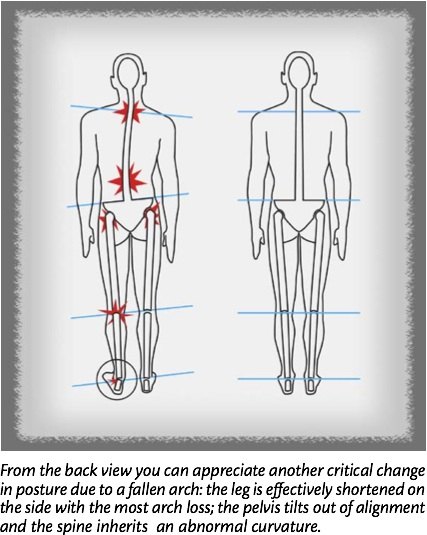
When an arch drops under load, the heel and lower leg roll inward with it. The knee follows, the hip adjusts, and the pelvis and low back take up whatever is left. None of that is dramatic in a single step. Over thousands of steps a day, it adds up in joints that are nowhere near your feet.
What people come in for
Heel pain and plantar fasciitis
The plantar fascia runs along the bottom of the foot from the heel to the toes. When the arch drops, it’s stretched with every step, and the pain usually shows up at the heel, often worst with the first steps in the morning. Holding the arch in a better position takes load off it. This is the problem that got me into Sole Supports in 2006.
Knee pain
An arch that collapses turns the shin inward, which twists the knee a little on every step. If your knee has been treated at the knee and keeps coming back, the foot is worth checking.
Hip and low back pain
When one or both arches drop, the pelvis can tilt and rotate to compensate. For some people that’s where the ache ends up: one hip, or one side of the low back, especially after long days standing or walking.
Bunions
A bunion forms at the base of the big toe. Orthotics can’t reverse one, but they change how weight rolls through the front of the foot, which can make shoes and long days more comfortable.
Flat feet and high arches
Both are cast the same way, in the foot’s corrected position, and calibration handles the difference between a foot that flattens easily and one that barely flexes.
Shin splints
Pain along the inside of the shin often comes with feet that roll in. Supporting the arch changes how the muscles of the lower leg are loaded.
Tired feet from standing all day
If your work keeps you on hard floors for hours, full-contact support under the arch changes how your feet feel at the end of the day.
What orthotics won’t do
Orthotics support the foot. They aren’t a substitute for medical care. If you have a recent injury, numbness, a wound that isn’t healing, or diabetes or circulation problems affecting your feet, see your physician first. And if I think your pain is coming from somewhere other than your feet, I’ll tell you at the consultation.
If you’re not sure your problem starts at your feet, that’s what the free consultation is for.
Book a free consultation
Twenty minutes, in person, at either office. If you decide to order, I can cast your feet at the same visit.
Salt Lake City
Downtown office
699 E South Temple, Suite 300D
Salt Lake City, UT 84102
Chiropractic too
Gentle Chiropractic
Orthotics don’t require a chiropractic visit. If you’d like gentle, low-force chiropractic care as well, book it on the practice site.
Gentle Chiropractic Salt LakeQuestions first? Call (435) 612-0411.